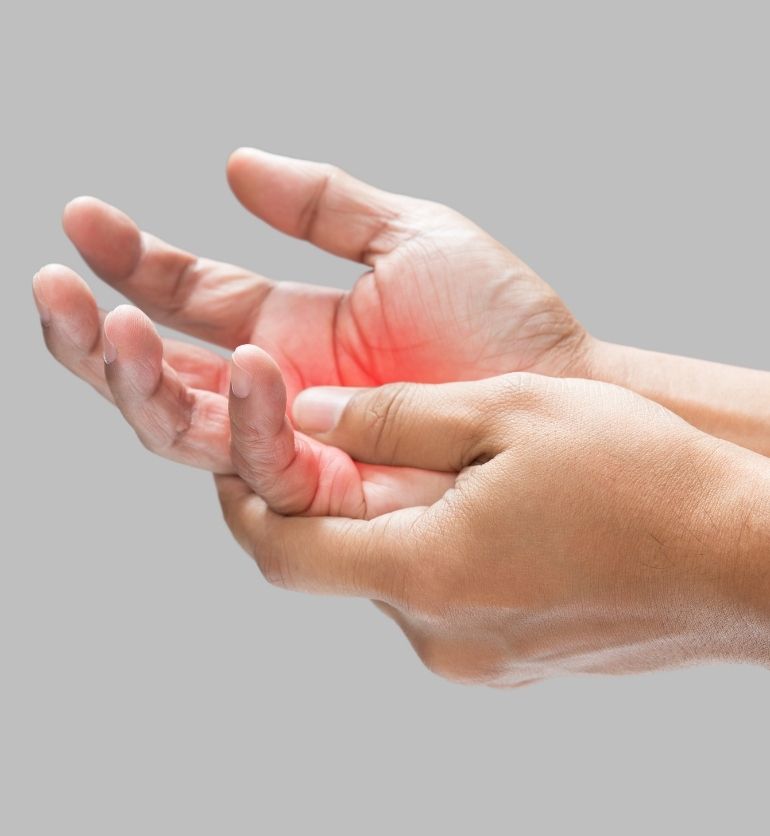
If your feet tingle at night, or your fingers feel like they have fallen asleep for no good reason, you have probably asked yourself the same question most people ask: why is this happening to me? The answer matters more than you might think. Peripheral neuropathy is not a single disease. It is what happens when the nerves outside your brain and spinal cord get damaged, and a surprisingly long list of things can cause it.
The good news is that the list sorts itself into a handful of groups, and finding your group is often the first step toward feeling better. In this guide, we will walk through the most common causes, the risk factors that raise your odds, and what to do with that information. If you are still sorting out what you are feeling, our guide to the early symptoms of peripheral neuropathy is a helpful place to start.
What peripheral neuropathy actually is
Your peripheral nerves are the wiring that connects your brain and spinal cord to the rest of your body. Some carry touch, temperature, and pain signals up to the brain. Others tell your muscles to move. Others quietly run things like digestion and blood pressure. When these nerves are damaged, the messages get scrambled, weakened, or lost, which is why neuropathy can show up as numbness, tingling, burning, weakness, or even a loss of balance.
According to the National Institute of Neurological Disorders and Stroke, peripheral neuropathy affects millions of people in the United States. That means you are far from alone, and it also means researchers have learned a lot about why it happens.
Diabetes and metabolic problems: the most common cause
If there is one cause to know about, this is it. Mayo Clinic describes diabetes and metabolic syndrome as the most common causes of peripheral neuropathy, and the NINDS says diabetes is the leading cause in the United States. Over time, high blood sugar can injure the tiny blood vessels that feed your nerves, and nerves that are not well fed stop working the way they should.
Mayo Clinic notes that diabetic neuropathy may affect up to half of people who have diabetes, though it is often preventable with good blood sugar control. If diabetes is part of your story, we explain the connection in more detail in Diabetes and Neuropathy: What's the Connection?
Vitamin deficiencies and alcohol
Nerves need the right nutrients to stay healthy. Mayo Clinic lists low levels of vitamins B-1, B-6, and B-12, as well as copper and vitamin E, among the known causes. This can happen when your diet is missing key nutrients, or when a health condition makes it harder for your body to absorb them. B-12 deserves special attention because a low level is also listed as a risk factor all on its own.
Alcohol is another well-known cause. Heavy, long-term drinking can damage nerves directly, and it can also make nutritional deficiencies worse. The encouraging part is that when alcohol or a deficiency is the culprit, addressing it can slow the damage and sometimes let nerves recover.
Autoimmune conditions and infections
Sometimes the body's own defenses turn against the nerves. Conditions such as lupus, rheumatoid arthritis, Sjogren syndrome, and Guillain-Barre syndrome can all lead to neuropathy. Certain infections can do it too, including Lyme disease, shingles, hepatitis B and C, and HIV. In these cases, treating the underlying condition is a major part of protecting your nerves.
Medications, toxins, and injuries
Some of the treatments that help us can also affect our nerves. Chemotherapy is the best-known example, and Mayo Clinic specifically mentions it as a medication-related cause. If you take a medication and notice new numbness or tingling, tell your care team rather than stopping the medicine on your own. There is often a way to adjust the plan.
Exposure to toxins such as lead and mercury can damage nerves, and so can physical injury. Accidents, falls, and repetitive motions can all put pressure on a nerve or hurt it directly. Carpal tunnel syndrome, which affects the wrist, is a familiar example of a pressure-related nerve problem.
Kidney, liver, and thyroid conditions, and other causes
Your nerves depend on the rest of your body working well. Kidney disease, liver disease, and an underactive thyroid are all recognized causes. Some bone marrow conditions and certain tumors can also affect nerves. And some people inherit a tendency toward neuropathy. Charcot-Marie-Tooth disease is the best-known inherited form, which is why family history belongs on your list of questions for your provider.
Your risk factor checklist
Causes tell you what damaged the nerves. Risk factors tell you how likely it is to happen. Based on the list from Mayo Clinic's page on peripheral neuropathy, you may be at higher risk if any of these apply to you:
- Poorly managed diabetes: The longer blood sugar stays high, the more strain your nerves are under.
- Obesity or metabolic syndrome: Both are linked to the same blood sugar and circulation problems that harm nerves.
- Heavy alcohol use: Alcohol can injure nerves directly and interfere with nutrition.
- Low vitamin B-12: A shortage can quietly affect nerve health over time.
- Autoimmune disease: Conditions like lupus and rheumatoid arthritis can target nerve tissue.
- Kidney, liver, or thyroid disorders: These conditions change the chemistry your nerves rely on.
- Exposure to toxins: Heavy metals and certain chemicals can harm nerves.
- Repetitive motion: Doing the same movement over and over can compress a nerve.
- Family history: Some forms of neuropathy are inherited.
Having one of these does not mean you will develop neuropathy. It simply means it is worth paying attention to early signs, and worth keeping up with regular checkups.
What if no cause is found?
Sometimes testing does not point to a clear cause. That can feel frustrating, but it does not mean nothing can be done. Treatment can still focus on easing your symptoms, protecting your safety, and watching for changes over time. Many people also find that a cause becomes clearer later, which is one more reason to stay in touch with your provider.
Why finding the cause matters
Knowing the cause changes the plan. If the cause is diabetes, steadier blood sugar can help protect the nerves you still have. If it is a vitamin deficiency, correcting it may help. If it is a medication, your doctor may be able to adjust it. The NINDS also notes that over time, as nerves heal, many people can reduce their medication doses or stop taking them altogether.
Understanding the type of nerve involved helps too. Our article on nerve damage symptoms explains how sensory, motor, and autonomic nerve problems can look different from each other.
Small steps you can take while you find answers
You do not have to wait for a diagnosis to start protecting your nerves. Mayo Clinic's self-care tips for peripheral neuropathy include a few simple habits worth adopting now. Check your feet every day for cuts, blisters, or sore spots, and wear shoes that fit well. Stay active with gentle exercise such as walking, yoga, or tai chi. Avoid smoking and limit alcohol. Eat a balanced diet with plenty of fruits, vegetables, and whole grains. And if you have diabetes, keep a close eye on your blood sugar.
None of these steps replaces a visit with your provider, but they give your nerves the best possible conditions while you work out the cause.
When to get help
Do not wait if you notice numbness or tingling that keeps coming back, weakness, burning pain, balance problems, or sores on your feet that you did not feel happening. Mayo Clinic points out that reduced sensation can lead to burns, skin injuries, and infections, and weakness can lead to falls. Early attention gives you the best chance of protecting your nerves.
If your symptoms continue even after the underlying cause has been treated, there are further options. Our team offers spinal cord stimulation for neuropathy, which may be worth discussing if other treatments have not given you enough relief. You can meet our specialists on the Our Providers page, or contact us to talk through your symptoms.
Frequently asked questions
Is diabetes the only cause of peripheral neuropathy?
No. Diabetes is the most common cause, but vitamin deficiencies, alcohol use, autoimmune conditions, infections, medications, injuries, and inherited conditions can all lead to neuropathy.
Can peripheral neuropathy go away?
It depends on the cause and how early it is found. When a cause can be treated, such as a vitamin deficiency or a medication problem, nerves may recover over time. In other cases, treatment focuses on slowing the damage and easing symptoms.
Can a medication I take cause neuropathy?
Yes, some can. Chemotherapy is the best-known example. If you notice new numbness or tingling after starting a medicine, let your care team know before making any changes on your own.
Does peripheral neuropathy run in families?
Some forms do. Charcot-Marie-Tooth disease is an inherited condition that affects the peripheral nerves, so tell your provider if a relative has had similar symptoms.
The bottom line
Peripheral neuropathy has many possible causes, but diabetes, nutrition, alcohol, autoimmune disease, infections, medications, and injuries account for much of the picture. Knowing your risk factors helps you spot trouble early, and finding the cause helps your care team choose the right plan. If something in your hands or feet does not feel right, we are happy to help you figure out the next step.