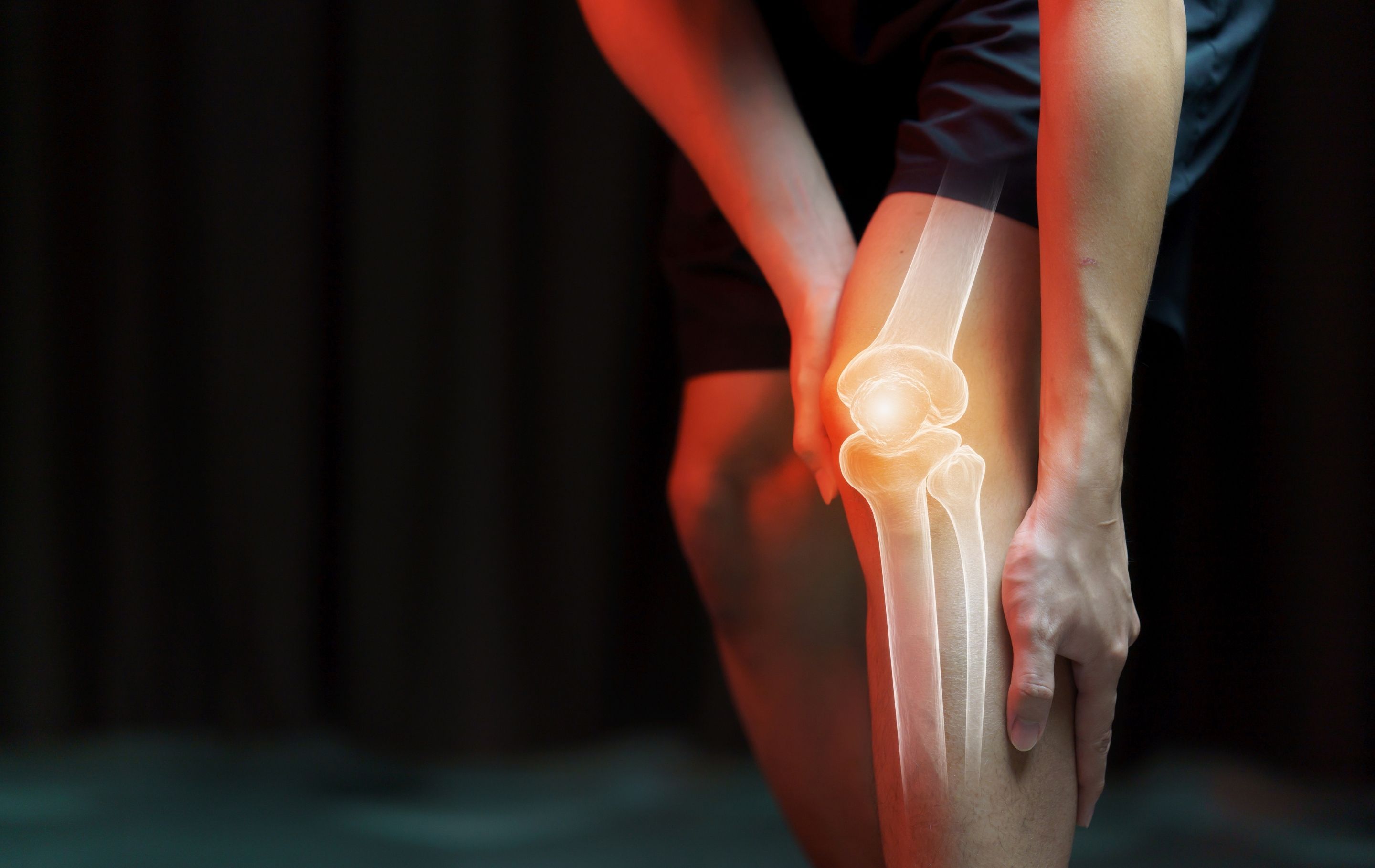
Knees take a beating. Every step, squat, and stair climb puts weight through a joint that's really just cartilage, ligaments, and fluid holding things together. So when your knee starts to ache, it's worth asking why, rather than just reaching for the ice pack and hoping it goes away on its own.
The truth is that knee pain has a long list of possible causes, from a fresh injury to years of gradual wear and tear. Some causes need urgent attention. Others are chronic conditions that respond well to the right long-term plan. This guide walks through the most common reasons your knee might hurt, and how to know which category yours falls into.
Osteoarthritis: The Most Common Cause of Chronic Knee Pain
If your knee pain has been building slowly over months or years, especially if it's worse in the morning or after periods of rest, osteoarthritis (OA) is often the culprit. OA develops when the cartilage that cushions your knee joint gradually wears down, leaving bone to rub against bone. According to the Mayo Clinic, this type of wear-and-tear arthritis is one of the leading causes of chronic knee pain in adults over 50.
Along with pain, common signs of knee osteoarthritis include stiffness, swelling, a grinding or crackling sensation when you move the joint, and a reduced range of motion. Angiogenesis, or the formation of new, often fragile blood vessels within the joint, plays a significant role in driving both inflammation and pain as osteoarthritis progresses.
Injuries: Ligament, Meniscus, and Tendon Damage
Sudden knee pain that follows a fall, a twist, or a sports injury usually points to a structural issue rather than gradual wear. According to Cleveland Clinic, common injury-related causes include:
- ACL or MCL tears: Often accompanied by a popping sensation and immediate swelling
- Meniscus tears: Cartilage damage that can cause the knee to lock or catch
- Tendonitis: Inflammation from overuse, common in runners and cyclists
- Bursitis: Inflammation of the small fluid-filled sacs that cushion the joint
- Fractures: Direct trauma to the kneecap or surrounding bones
Other Common Causes of Knee Pain
Not every source of knee pain fits neatly into "arthritis" or "injury." A few other conditions are worth knowing about.
- Rheumatoid arthritis: An autoimmune condition that attacks joint linings, often affecting both knees at once
- Gout: A buildup of uric acid crystals that can cause sudden, intense joint pain
- Baker's cyst: A fluid-filled swelling behind the knee, often linked to an underlying joint problem
- Patellofemoral pain syndrome: Discomfort around or behind the kneecap, common in younger, active adults
- Referred pain: Sometimes hip or back problems show up as knee discomfort
When Knee Pain Signals Something More Serious
Most knee pain isn't an emergency, but a few signs mean you shouldn't wait to get checked out. Seek prompt medical attention if you experience a knee that's unable to bear weight, visible deformity, significant swelling that develops within hours, fever combined with joint pain, or pain following a significant injury.
How Knee Pain Is Typically Diagnosed
A thorough evaluation usually starts with a physical exam to check for swelling, stability, and range of motion. From there, your provider may order imaging such as an X-ray to look at bone and joint space, or an MRI to evaluate soft tissue like cartilage and ligaments. Getting an accurate diagnosis matters because the right treatment for a meniscus tear looks very different from the right treatment for osteoarthritis.
Who Is Most at Risk for Chronic Knee Pain?
Certain factors make chronic knee pain, and osteoarthritis in particular, more likely to develop. Age is one of the biggest, since cartilage naturally wears down over decades of use. Carrying excess body weight adds significant stress to the knee joint with every step, and previous knee injuries, even ones that healed years ago, can leave the joint more vulnerable to arthritis later in life.
Occupations and hobbies that involve repetitive kneeling, squatting, or heavy lifting also raise the risk, as does a family history of arthritis. None of these factors guarantee you'll develop knee pain, but recognizing them can help you and your doctor watch for early warning signs.
Simple Steps That Can Slow the Progression of Knee Pain
While some causes of knee pain need medical treatment, a few lifestyle habits can meaningfully reduce strain on the joint and slow the progression of osteoarthritis.
- Maintaining a healthy weight, since every extra pound adds multiple pounds of pressure on the knee with each step
- Low-impact exercise, such as swimming or cycling, to strengthen supporting muscles without added joint stress
- Stretching regularly to maintain flexibility in the muscles surrounding the knee
- Wearing supportive footwear, especially if you spend long hours on your feet
- Avoiding activities that consistently trigger pain, rather than pushing through discomfort
Treatment Options, From Conservative to Minimally Invasive
For many patients, especially those with early-stage osteoarthritis, conservative approaches like physical therapy, weight management, activity modification, and anti-inflammatory medication provide meaningful relief. But when knee pain becomes chronic, especially pain driven by osteoarthritis that hasn't responded to those first-line options, it may be time to consider additional treatment before jumping straight to surgery.
Genicular Artery Embolization (GAE) is a minimally invasive, outpatient procedure that targets the small blood vessels contributing to chronic inflammation in an osteoarthritic knee. By selectively reducing blood flow to these vessels, GAE can meaningfully reduce pain and improve function, often allowing patients to delay or avoid a total knee replacement. Unlike knee replacement surgery, which typically requires general anesthesia and weeks of rehabilitation, GAE is performed under conscious sedation through a small incision, with most patients returning to normal activities within days.
What Recovery Looks Like After GAE
One of the most appealing aspects of GAE for many patients is how straightforward the recovery process is compared to knee replacement surgery. The procedure itself generally takes about an hour, after which patients are monitored for a short period before heading home the same day. Many patients notice some benefit within the first three days, and most are able to resume normal daily activities without the extended rehabilitation schedule that comes with a knee replacement.
By comparison, total knee replacement typically involves a hospital stay of one to three days, three to four weeks of outpatient rehab, and a full recovery timeline that can stretch anywhere from three to twelve months. For patients whose knee pain is significantly impacting daily life but who want to explore every option before committing to major surgery, that difference in recovery time is often a deciding factor.
Am I a Candidate for GAE?
GAE tends to be a strong option for adults between the ages of 40 and 80 who have moderate to severe knee pain from osteoarthritis confirmed by X-ray, along with local tenderness around the knee, pain at rest or pain that disrupts sleep, and pain that hasn't responded adequately to NSAIDs, joint injections, or physical therapy.
If you're unsure whether you might qualify, we also offer a quick quiz that can help you better understand your current condition and whether GAE may be a good fit for you. The best way to know for certain, however, is through a consultation with a specialist who can review your imaging and medical history.
Chronic knee pain doesn't have to mean a knee replacement is your only option. Talk to our team about whether a minimally invasive approach like GAE could be right for you.
Request a Knee Pain Consultation.
Frequently Asked Questions
Is it normal for my knee to hurt more in the morning?
Morning stiffness that improves after you move around for a few minutes is a classic sign of osteoarthritis. If the stiffness lasts longer than 30 minutes or is accompanied by swelling in both knees, it's worth mentioning to a doctor, since that pattern can also point toward rheumatoid arthritis.
Can knee pain go away on its own?
Minor strains and overuse pain often improve with rest, ice, and activity modification. Pain from arthritis or a structural injury like a torn ligament typically doesn't resolve without treatment and can worsen over time.
Do I need surgery for knee pain?
Not necessarily. Many patients find relief through conservative treatment, and others are good candidates for minimally invasive options like Genicular Artery Embolization before considering a knee replacement.
How do I know if my knee pain is arthritis or something else?
The most reliable way is a proper evaluation, including a physical exam and imaging if needed. Gradual onset, morning stiffness, and a grinding sensation point toward arthritis, while sudden pain after an injury usually points toward a structural issue.
How is GAE different from a cortisone injection?
Cortisone injections temporarily reduce inflammation within the joint itself, but their effects typically wear off within weeks to a few months. GAE targets the abnormal blood vessels that drive ongoing inflammation, aiming for longer-lasting relief from a single outpatient procedure.